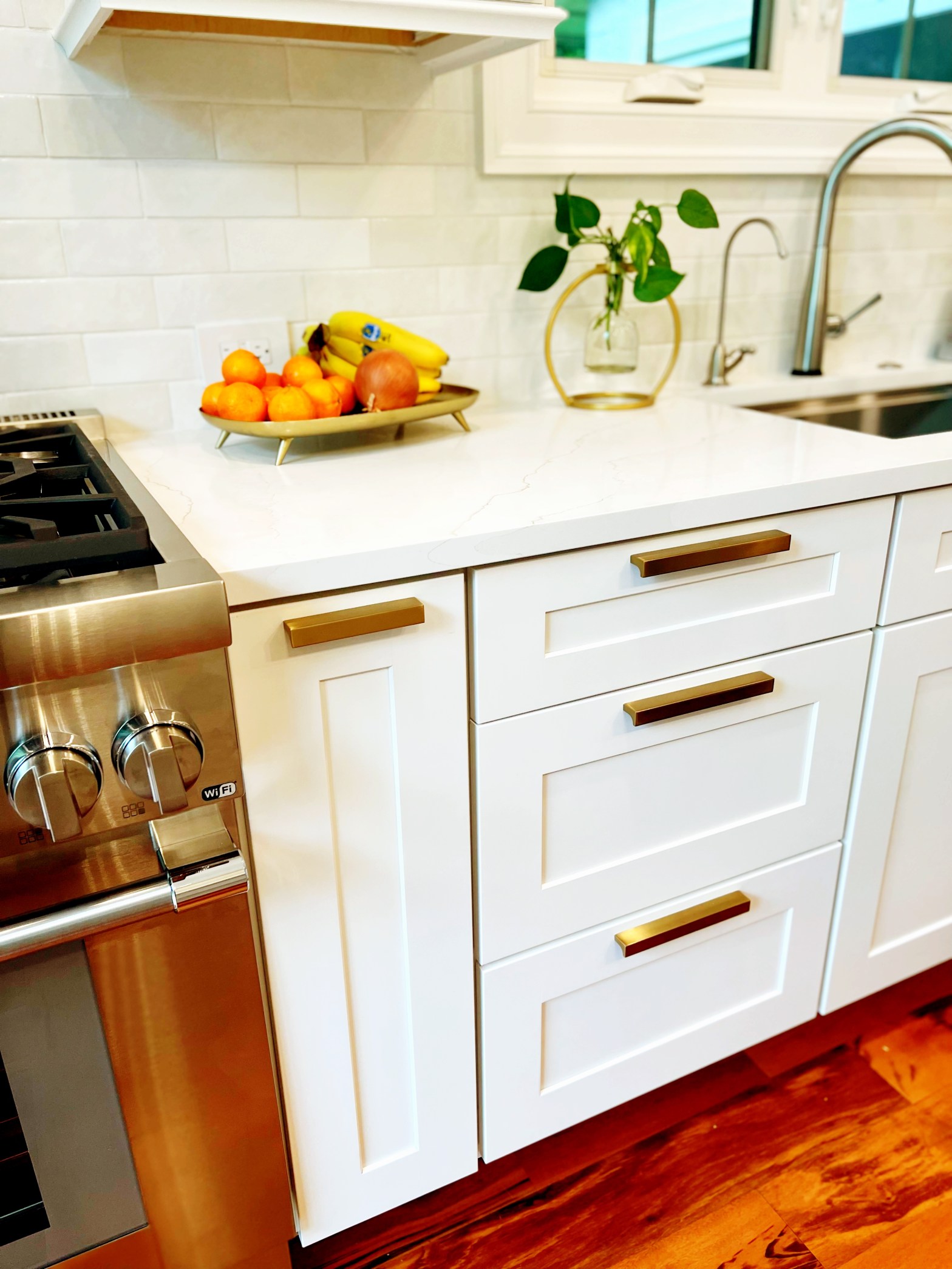
Organizing your kitchen cabinets is one of the most important areas you can focus on when tackling organization projects in your home. They are likely the most frequently used places, and a lot of time is spent searching and looking for items. There are many great blogs and sites on how to best organize your pantry and cabinets. This is not that blog! Haha!
The purpose of THIS blog is to help you clean the outside of your kitchen cabinets, know which products to use on them, the best steps for cleaning inside your cabinets, and a few tips for keeping them clean and organized.
Cleaning the doors of your cabinets
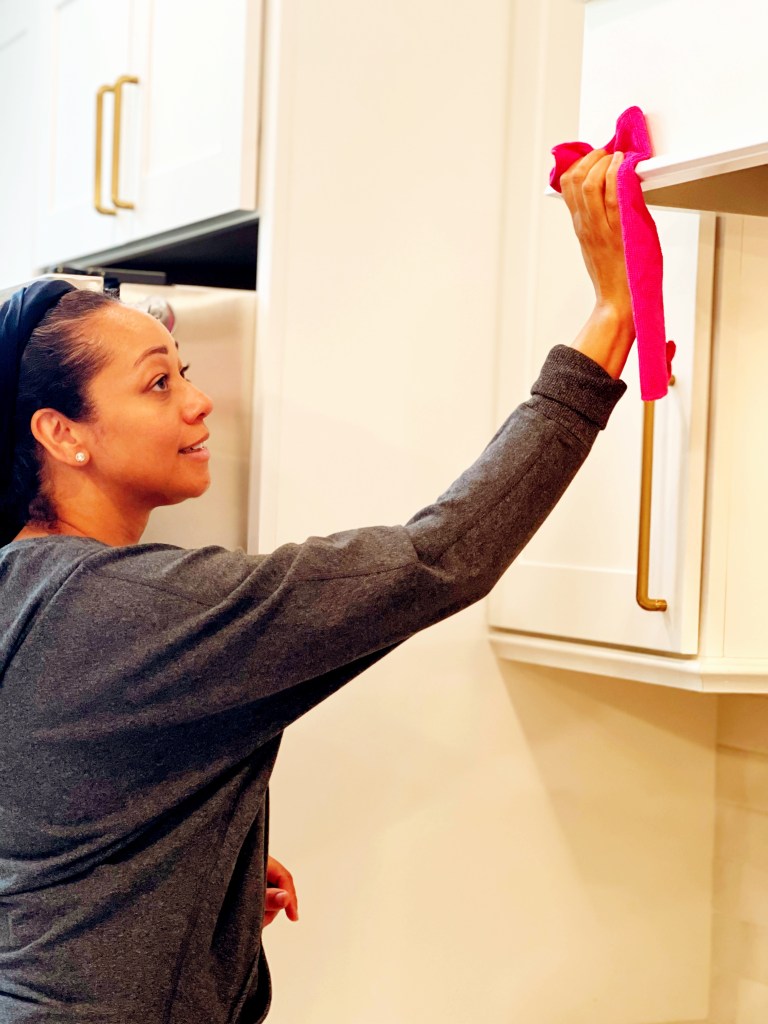
This is something that likely needs to be done once a week if you have a house full of people, or once a month if you live alone. I noticed when I have done work for new customers in the past, that one of the dirtiest places on their kitchen cabinets (besides the knobs) was the top of the cabinets. The top rim on cabinet doors, collect lots of dust and rarely get wiped because we have a habit of cleaning what we see. The top rim of your cabinet is likely full of dust and cooking grease.
The fronts of cabinets tend to be the dirtiest near the knobs. This is from our dirty hands making marks on them, that does not get wiped up. For anyone who has a cabinet that stores your trash can, you can attest to how dirty the inside of that cabinet gets. It is so important to wipe that out once a week at the very least because once the food gets stuck on there, it is hard to remove it without ruining the finish of the cabinet.
It is also important to know which type of cabinets you have, so you do not use the wrong type of cleaner. The two main types I will discuss are laminate and hardwood.
Laminate cabinets can take a serious beating! It is really hard to destroy these with cleaning products. Some cabinets I have cleaned were completely soiled in grease and cigarette smoke and I had to use oven cleaner on them, and still didn’t ruin them! Though I am not recommending you do that (unless this is your last resort before replacing them), I am only making the point that most products will safely clean them. My regime goes as follows:
White Laminate :
- Spray Clorox clean up on the door fronts (using a mask and having a well-ventilated kitchen)
- Use a warm wet washcloth to wipe the surfaces until clean
- Follow with a dry cloth, and for that extra clean smell, spray a tiny bit of Lemon Pinesol on the dry cloth (or your favorite cleaner) before you wipe them dry.
Dark Laminate:
- Use a bucket of warm water, and add ¼ cup Lemon Pinesol, 1 tablespoon of soap, or your favorite cleaner.
- Wipe the cabinets liberally with the cleaning solution until clean.
- Follow with a dry cloth, and wipe until all water and smudges are gone.
Last Steps: whether you have white or dark laminate, make sure to disinfect those handles. For this step I do the following:
- Cut paper towels into small squares I use a half sheet and cut it into 15 small pieces as shown. You will need several because you are going to use one square per knob.
- Use your favorite disinfectant such as Clorox Clean-Up, hydrogen peroxide, or rubbing alcohol (and contrary to what you may find on social media, vinegar is a disinfectant but it only kills SOME germs. I don’t know about you, but I’m looking to kill 99% of bacteria! Insert Cardi B’s “ okay” here). Spray a little bit of solution to one square, wipe the knob completely, throw away the square, and start again with the next one!
Hardwood Cabinets
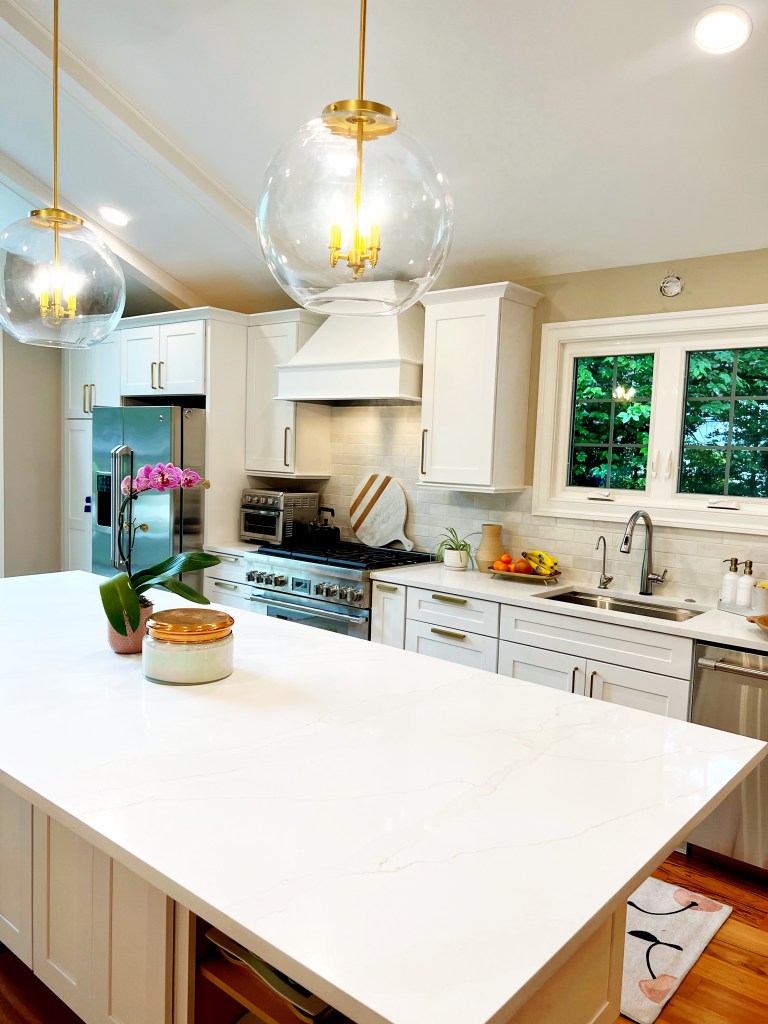
Hardwood cabinets can be custom-made to fit your space, can add more value to your home, and last longer than laminate. However, they are more sensitive to cleaning chemicals and require care and caution when cleaning them. Because of these factors, I use only gentle cleaning agents on the doors. Diluted Lemon Pinesol (¾ parts water to ¼ lemon pine), Murphy’s oil soap (yes they still make this), or just dish soap and water (especially, if you have recently repainted your cabinets). For tough stuck-on grease and grime, a solution of 2 parts water, and one part white vinegar is a good mixture to you use as well. You can also add a few drops of grease-fighting dish soap to this solution as well. The steps I use to clean them are:
- Make a spray bottle of one of the above mention cleaners.
- Spray your cabinets one at a time as you clean ( I do not recommend letting the cleaning solution sit on the cabinets).
- Wipe clean with an old t-shirt, or microfiber cloth to remove grease and grime. I would NOT use a dish sponge, non-abrasive sponge, NOR scrub brush. This could not only ruin the protective finish on your cabinets, but it can also scratch the surface.
- Finish with a dry clean t-shirt, micro-fiber cloth, or my favorite a paper towel.
- Lastly, as with cleaning laminate cabinets, you also need to wipe down the hardware with a disinfectant. Follow the “last steps” from the laminate cleaning steps.
Cleaning the inside of the cabinets
This step likely will take the longest. In this phase, you are
- Throwing away hard and unused spices, food, Tupperware, etc.
- Wiping down the tops and bottoms of shelving (for spills and cobwebs) with the same cleaning solution you used to clean the doors of your cabinets.
- Organizing the items in a way that makes sense to you. No one system will look the same, because organizing isn’t a one size fits all kind of thing. I do have a few practical tips for organizing your items, however.
Here are a few ideas you may find helpful:
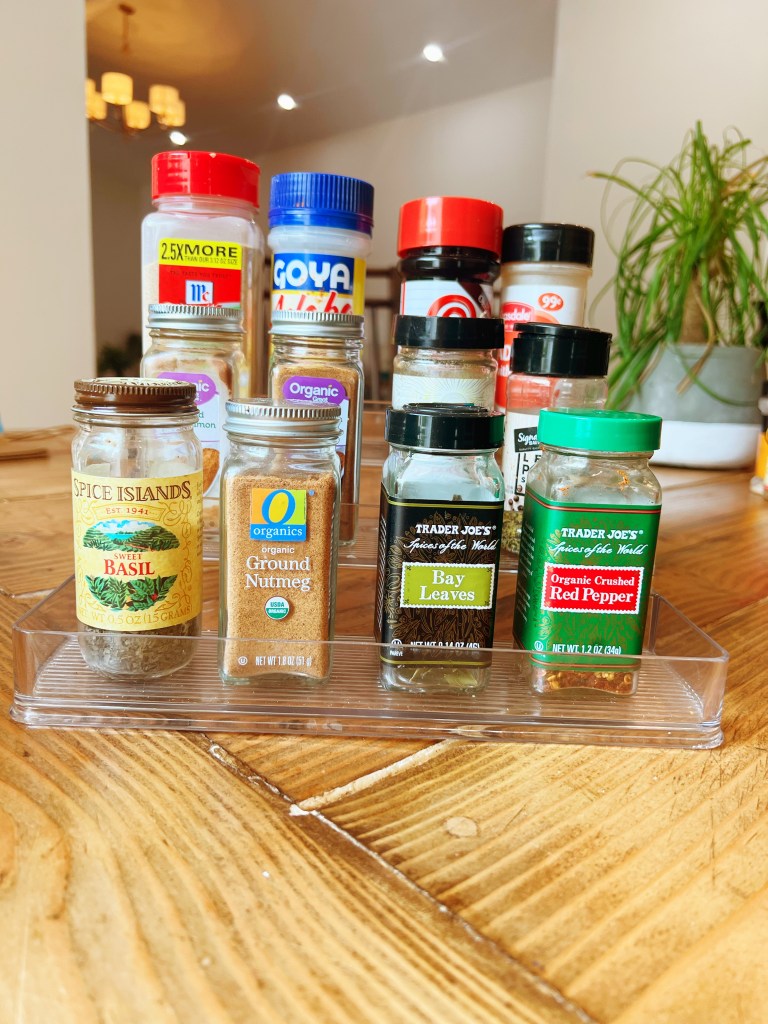
-for spices, I love to store them in a multi-tier level organizer. This helps me see everything I have at eye level without having to move them all around.
My other favorite organization obsession is these lazy susans.
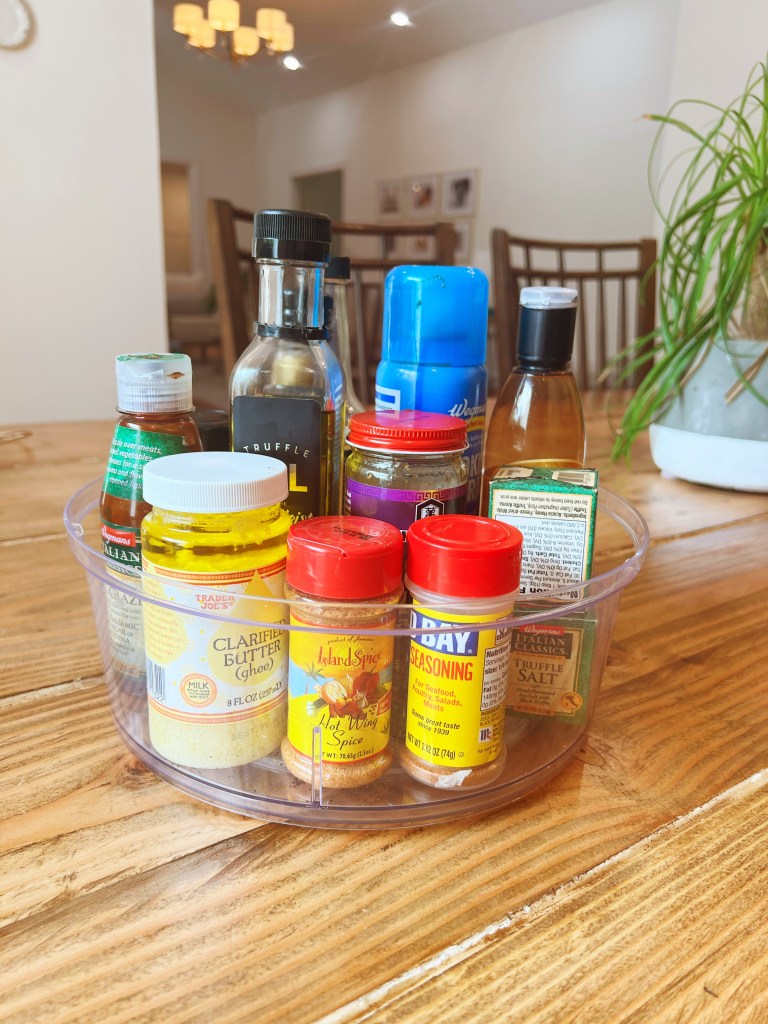
I wish I could find one big enough to store all my clothes on!
Both of these can be found at my favorite, The Container Store.
-For canned goods, I place the cans I use more frequently to the left, like beans and tomato paste ( I probably go through about 4-5 of those per week). The other cans I use less frequently go to the right.
I like to put the kid’s snacks on the two bottom shelves in my pantry so I don’t have to get them for them. This only works if you have kids like mine who ask before they grab snacks before dinner 🙂
These are just a few examples of helpful tips, and as you begin to restock your shelves, you will know what works for you!
And lastly,
- For a more fulfilling and gratifying organization experience, you may also add lined paper such as tack paper, or my favorite -peel and stick wallpaper. Adding this fun step helps incentivize you to keep your cabinets clean and organized. At least for me, it does!
Cleaning the items in your cabinets
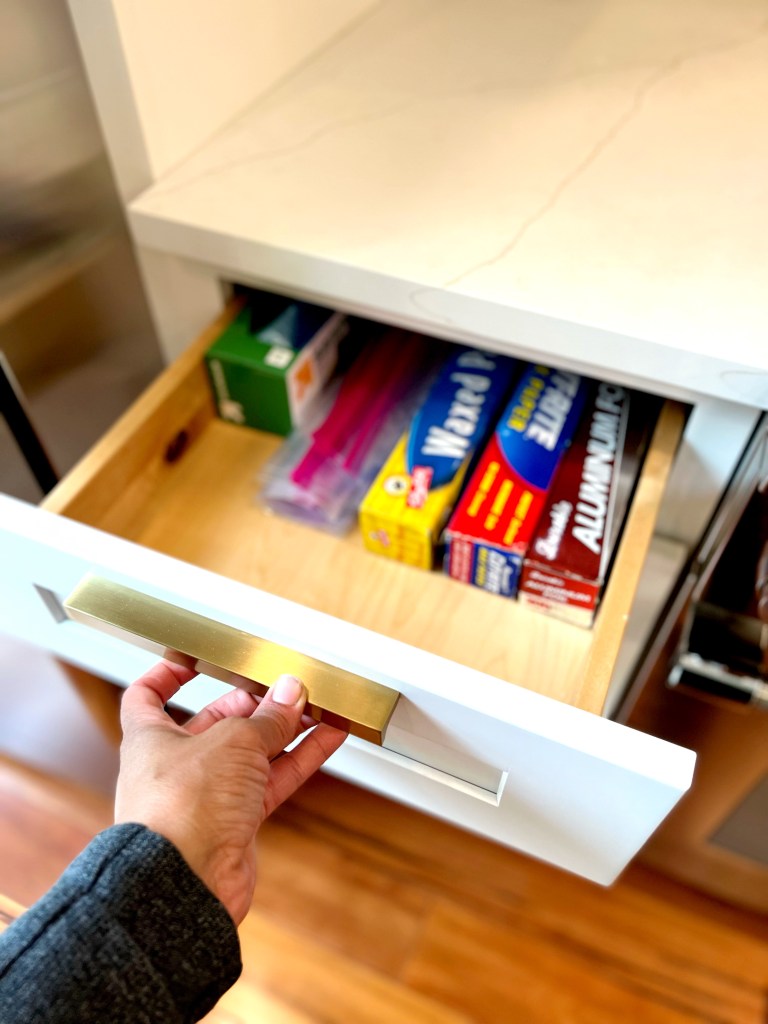
This also is one of the most important steps in keeping your kitchen free from bacteria and germs that will ultimately spread throughout your house. There are items we touch on a daily basis with dirty, bacteria-filled fingertips and we do not realize the impact they can have on our overall health. Most of these items are containers that are touched as soon as you or your children come into the house, or worse yet, items you touch while cooking with raw meat. Here are a few areas you may be spreading bacteria to and not even realizing it:
Spices you use while cooking
Containers that hold snacks for you or your family
Containers that get re-filled over and over again (i.e flour and sugar containers)
These items need to be washed with hot soapy water on a continual basis. For example, I try to switch out my spices to glass spice jars, because I like to wash them down with hot soapy water (the main 4 I use daily) every day. I am constantly touching raw meet, and opening cabinet drawers and doors. To the best of my ability, I wash my hands after I touch raw meat -but guess what? I am human, and busy and distracted juggling other things at the same time. So on the off chance I did not successfully wash my hands, I go back with my paper towels, or Clorox wipes and wipe down all my cabinet hardware and drawer pulls. While dinner is cooking, I wash down my used spice bottles from that cooking session (tight lids needed for this task!). It sounds like a lot, but I am only wiping one or two doors down and it takes just a few minutes, and I am usually doing this while I wait for the food to cook.
These are just a few examples of how easy it is to cross-contaminated in your kitchen. Can you think of others?
I know I usually have 5 steps or 5 things for you, but I am not a fan of making up stuff just to talk! I believe this routine is what you need to properly clean and organize your kitchen cabinets. If you can get into a good system of cleaning then this project doesn’t need to take too long each time. It will take a while the first time, but if you can implement this into a schedule, it could help you in the future:
Cabinet doors and pulls-once a day (with wipes)
Door fronts -once a week, or once every other week
Inside your cabinets -once every 6 months
You can also opt to clean the inside of your cabinets just once a year, and that’s okay as well. Just as long as you are wiping down those spice bottles, and refrigerator door handles frequently, the world won’t stop because the inside of your cabinets isn’t the cleanest.
SO there you have it, my tips for clean cabinets. I hope you found them useful and are able to put them into practice right away!
Stay Squeeky!
Michelle M
 The Squeeky Clean Method